Wednesday, 15 December 2010

Fresh and Crunchy Winter Salad

I love all those root vegetables in the winter, roasted, pureed, soup-ed  – good hearty comfort food.  But every now and then don’t you crave a fresh salad?  Something raw and colourful?  Try this red cabbage slaw.

Quarter of a red cabbage, shredded finely
One large (or two small) carrots, grated
Half a shallot, finely chopped
An apple, peeled, cored and grated


Mix in the following sweet and salty dressing:

1 large tbsp mayonnaise
1 tablespoon cider vinegar (or lemon juice)
1 tablespoon sweet chilli sauce (or pinch of powdered chilli and a teaspoon of sugar)
2 teaspoons Thai fish sauce
2 tablespoons of olive oil

You can also add a tiny bit of toasted sesame oil if you have some.

Double up the ingredients for more people, and this salad does keep well in the fridge for a couple of days.

Play around with other shredded or grated ingredients, such as grated raw beetroot, grated celeriac, and of course shredded white cabbage.  You could also replace the mayo with yoghurt for a lower fat version.

Wednesday, 8 December 2010

Ideas for Inexpensive Christmas Gifts

Don’t think you have to spend a lot of money on gifts for them to be appreciated.  As the old saying goes, “it’s the thought that counts”.  And that doesn’t mean, I thought of giving you a present but didn’t get around to it!  The time you take to think about what someone would like is worth so much more.  Put your time into finding something unique that shows you have really thought about the person.  Use your talents to make something special.

Being creative doesn’t necessarily mean you have to know how to sew, cook, or draw.  It means being creative with your ideas.

Assembling quite ordinary inexpensive things into a personal and attractive package makes a wonderful present that shows you have really thought about the person.  Shops do it all the time – they take very basic and cheap items and package them up together to look pretty and charge twice the price.  Don’t buy the packaging, do it yourself.

I once received as a gift a “hot chocolate kit”. Inside a little wicker box was a red jug, a box of organic cocoa powder and a packet of baby marshmallows.  The fact that the chocolate was organic made it especially personal to me. I loved it.

Trawl the charity shops or ebay for interesting jars and containers or porcelain, and fill them with things relevant to the person you are giving to.

What can you do with an old jam jar or a mason jar?

How about filling a pretty jar full of little scrolls of paper tied up with ribbon or string?  On each scroll could be printed or hand-written, say, a new year’s resolution for every day of the year, reasons to smile today, inspirational quotes…..  You could play around with decorative or different coloured paper, embellish the jar…

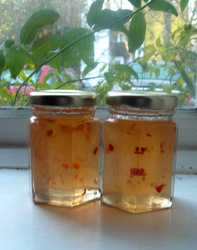
Here’s a really easy recipe for sweet chilli jelly. Cover the lid with a square or circle of pretty fabric and tie with an elastic band, ribbon or string.  You could also add a gift tag.

How about some Christmassy chutney?  Here’s my favourite Beetroot and Orange Chutney recipe.

A quick search of the web under “gifts in a jar” brings up loads of sites with all sorts of recipes and ideas.  I like the idea of cookie mixes in a jar, particularly for children.  You could attach a cookie cutter to the outside of the jar.

I found some great gift in a jar ideas and here.  Personally, I’d be delighted with some flavoured vinegars or some garlic oil in a pretty bottle.


What can you do with a vintage biscuit tin?

Fill it with edible goodies. This is particularly good if you or your family live in different countries.  You can find them things they can’t buy at home.  Adults love favourite sweets from their childhood.
 
Turn it into a sewing kit.
Make a first aid kit for the car.
Fill it with home-made biscuits or a cake.  Or another old favourite: slice dried dates down the middle and stuff with marzipan.  Easy peasy.

Maybe the decoration on the tin would fit more in a bathroom or bedroom, in which case put in a flannel and some soap. Or a selection of make-up…


What can you do with a vintage cup and saucer?

Surprisingly pretty ones can be picked up cheaply.  You could fill them with pretty sweets – like Dolly Mixtures for example.  I like to turn these into candles, using soy wax flakes.  All you need to do is to melt the wax in a saucepan or microwave and pour into the teacup.  Plus they last longer, are more ecological than paraffin wax and don’t give off any nasty fumes or stains.   You may find the soy wax in your local DIY or craft store, or I found soy wax flakes on ebay for around £6 a kilo plus p&p.  Expect to pay another £2 or £3 for some ready-prepared wicks.  If you are planning on making a lot of them, this works out as a very pretty and economical present.  Once the wax has been burnt away, the cup can be refilled again very easily.

Package it up with a packet of flavoured tea.  You could even make little tea bags from small squares of muslin, add a teaspoon of tea, tie it up with a ribbon or string, then pop it in the teacup.


What can you do with recycled paper or old wallpaper?

Make an origami box from some recycled paper, a roll of old wallpaper, or even decorate your own paper.  I found instructions on the net for how to make origami boxes, or here's another origami box tutorial .  You could fill them with sweets, truffles, anything you fancy.

 
What can you do with unwanted or Charity Shop clothing?

Look out for some woollen jumpers in your local charity shop, or use an old one – but they must be made of wool.  Put them through the hot cycle in the washing machine, then in the dryer to shrink them.  Hey presto, you have felted wool which can then be cut up and made into all sorts of things: mittens, Christmas decorations, hottie cover…

Here are instructions for how to make felted wool mittens. Or here's another felted wool mittens tutorial
Here’s an easy hottie cover tutorial.

Take some funky or colourful long socks or tights, cut off the feet and make them into legwarmers.  You’ll need to sew up the ends so that they don’t fray. Thread a thin ribbon around the top and tie into a little bow.

Interesting and quirky clothing could make an amazing costume for a child.  Remember to package it up well.

Another idea that costs nothing but your time, is to print or write up decorative coupons, a kind of IOU Slave Day.  It could be for a massage, to cook a meal for someone, to take a child out to the zoo… Adults invariably have a whole of list of things they never get around to doing.  They would love it if someone did it for free without being asked.  Weed a border in the garden, clean out a kitchen cupboard, wash the car, sort the photographs and make an album…or just simply an entire day of service.  And then do it with pleasure.

A photo collage of memories in a decorative frame is another good one.

If you have a huge family and can’t manage individual gifts, make it a collective one.  E’s gift to us this year is to bring us back a good old Christmas pudding and some crackers that we can all share. 

How about this free downloadable calendar.  If you have access to a colour printer and some nice paper, this would make a gorgeous gift.

You can make labels for nothing by printing out these free downloadable gift tags.

Have fun.

Do you have any more good ideas for cheap but thoughtful gifts?

Beetroot and Orange Chutney


You will need:

350g chopped beetroot - peel if raw, or use cooked but not preserved in vinegar
350g apples chopped
300ml vinegar - malt or cider
200g sugar
225g finely chopped onions, preferably red
1 garlic clove finely crushes
finely grated rind and juice of 2 oranges
1tsp ground allspice
1 tsp salt

Put the vinegar and sugar in a saucepan and heat until the sugar has dissolved.  Add all the other ingredients and simmer for 40 minutes or until soft and chutney-like, stirring occasionally to make sure nothing catches on the saucepan base.

Pour into sterilized jars while still piping hot.  Screw on lids and turn upside down for 5 minutes, to seal.

You might also like my recipe for sweet chilli jelly.

Sweet Apple Chilli Jelly Recipe

Photo: Hot apple chilli jelly
The proper way to make any kind of apple jelly is to cook the apples, skin, cores and all, and then strain the juice through a strainer to get a nice clear jelly.  But if you can't be arsed haven't got the time to do all that (like me) then buy clear apple juice - preferably organic.

You will need:

Sterilized jam jars (see here for how to sterilize)
1 litre apple juice
1 tbsp chilli flakes
3 garlic cloves
Jam sugar (sugar with added pectin)

Pour the apple juice into a saucepan, add the sugar according to the ratio on the packet (mine is 1 part sugar to 2 parts juice, so for 1 litre of juice, I use 500g sugar).  Add 1 good tablespoon of dried chilli flakes, or more/less according to taste, and three pressed garlic cloves.

Bring to the boil and simmer for the amount of time indicated on the sugar packet.  The one I buy is only about 5 minutes.

Carefully pour into your sterilized jars, put the lids on immediately and turn upside down for 5 minutes.  This sterilizes the lids further and seals the lid properly.  Keep an eye on it as it cools and turns to jelly, because sometimes I find it needs to be turned upside two or three times to keep the chilli flakes and garlic bits well distributed throughout the jelly.

Highly recommended with roast chicken.

Play around with other ingredients such as chopped rosemary, basil, jalapeno peppers, red peppers...

This would make a lovely gift.  Next time you buy jam, pay a couple of pence extra if necessary to get a pretty jam jar (like Bonne Maman).  You could cover the lids with a piece of fabric tied on with an elastic band or ribbon.  A personalized label would be nice, too.

photo source The Cottage Smallholder

Monday, 6 December 2010

Easy Meals with a Slow-cooker

I bought my daughter a slow-cooker (the cheapest one at Argos is £10).  They've been around for ages, but we tend to forget them.  I think it is a useful time-saving gadget. She can put in all the ingredients in the morning before going off to uni, turn it on and come home to a hearty, hot dinner in the evening.

Alternatively she could put it on in the evening, let it cook overnight, and have it for the next day.  Although in this case, I would suggest using a timer so that it stops early enough for it to have cooled down by the time you get up, because you will need to put it in the fridge while you are out for the day.

They are great for making all kind of stews.  Basically what you need is:

  1. whole bunch of veggies
  2. some meat or other form of protein
  3. liquid for the sauce
  4. Flavouring/spices, etc
So for veggies, root vegetables are good: carrots, swede, parsnip, potatoes, beetroot, onions, etc. Other veg like cabbage and leeks and pumpkins are good too, but broccoli or green beans will disintegrate with the slow cooking.  I would always put in onion and garlic as a base.  Chop everything up into bite-sized pieces.

For meat, you can use pieces of beef, lamb, pork, chicken or even sausages.  Don’t buy expensive meat because it will be ruined by slow cooking.  Get the cheaper cuts and they will be better for being cooked a long time.
You can also use beans or lentils instead of meat.  Either add a tin of baked beans, or kidney beans.  That will give you protein (and possibly wind!).  I like orange lentils with onion, garlic, carrots and ginger.

For the liquid, use stock cubes.  The liquid can be from water; or tinned tomatoes or passatta (pureed tomatoes).  You can add in beer (with beef) or wine (red for beef and lamb, and white for chicken and pork). The liquid will need to cover everything else.

For flavouring, you will already have the stock cubes, but you can add more flavours such as curry, chilli, cumin, etc  You shouldn’t need to add salt because the stock is already salty.


Try these combinations:

Tajine of lamb: lamb pieces, onions, carrots, potatoes, dried apricots, cumin, cinnamon (only a little), ginger, tin of chopped tomatoes or passatta, and extra water.  Can eat with couscous (easy to make).

Beef stew: beef pieces, bacon bits (optional), onion, garlic, carrots, parsnip, prunes, water and stock cubes for sauce.

Chilli con carne: minced beef, onions, garlic, tin of kidney beans, chilli, cumin, a little cinnamon or cinnamon stick, tinned tomatoes, water if necessary.

Chicken curry: chicken pieces (buy boned chicken thighs), onion, potatoes, raisins, curry powder/paste and water.  Lovely with a baked potato or rice.

Chicken and cabbage: chicken pieces, chunks of cabbage (not sliced thinly), potatoes, stock cube, water, chilli sauce, soy sauce, suggest you don’t put too much water in this one.

Although I haven't tried it myself in a slow-cooker, I'm wondering if you could cook a whole chicken in there.  I cook chickens for 4 hours in my oven, so I don't see why not.  Sit the chicken on a bed of sliced onions, and add a little water, although the chicken will render its own juices.

Sausage casserole: sausages (put them on the top), onions, garlic, carrots, beetroot, swede, tinned tomatoes, cumin, stock cubes and a little honey or sugar.

With the leftovers, you can always add more water and whiz them up to make a lovely soup.

Saturday, 4 December 2010

My Philosophy on Cooking


Views: 180
Downloads: 69
Added: 23.09.10
1200x1800 (273.3 KB)


I believe that everyday cooking should be healthy, quick, colourful and extremely tasty.  And that doesn’t mean buying ready-made meals.  I cook pretty much everything from scratch, but I rarely spend more than half an hour to prepare meals.

Some people prepare their meals the week before and shop accordingly.  Some people use recipe books and shop accordingly.  I used to do that, but not any more.  Although I love food and cooking, I’m not willing to spend that much effort, money and time on cooking.  I look in my fridge and cook with what I’ve got.

I like to eat organic food, that has been grown locally and is in season.  It’s good for the soil, my body and my purse.

I have a box of organic fruit and veg every week, and along with my store cupboard basics ingredients, I can usually rustle up something edible.  This kind of cooking also means you can take advantage of what’s on offer at the shops, particularly for expensive items like meat or fish.

I taught myself to cook by following recipes, and I do have many years’ experience.  But I think it’s much more useful (and fun) to learn the basic principles, get the general idea, and then play around with ingredients, much like I described in the soda bread recipe.  Working backwards if you like.

Actually, this philosophy applies to much of life.  When you want, need or desire something, get into the habit of looking at what you have already, whether it be ingredients, belongings, looks, talents or even friends, and make the most out of that, before you start looking elsewhere to acquire new stuff.  This is what I call simple and creative living.  It might not always work, but I always try it first.  Because starting from scratch always requires a lot more time, money, effort and resources, and eventually becomes a drag. 

Starting with what you have forces you to get creative and you will build skills that lead you to true independence.

Perhaps you are snowed in at the moment.  Aren’t you glad you know how to make a meal out of what’s left in your cupboard, instead of having to find a way of getting to the supermarket?

Monday, 29 November 2010

Cheap and Simple Cleaning

If you were to do what manufacturers would have you believe, you would be buying a different cleaning product for every different task.  A quick search on a DIY superstore’s website brought up 180 different cleaning products.  I mean, how many different types of dirt do we have?

I say spend your money on something that gives you pleasure and don’t waste it on stuff you don’t need, particularly stuff that contains dubious chemicals that affect your health and end up in the environment for ever.

Apart from washing up liquid and laundry soap, 99% of my cleaning is done with just three products:

Vinegar
Pierre d’argent cleaner
Soda crystals

White vinegar – magic stuff.  Buy the cheap distilled white or pickling vinegar from the supermarket.  In France it costs me less than 1 euro a litre.  It’s one of the most versatile and economical products you can buy.

For example:
Add a cupful to pail of water for mopping the floors
It’s great for descaling - around taps, shower heads, etc.  Soak a piece of kitchen paper in vinegar and wrap it around the scale and leave overnight.  Or leave it in the kettle overnight to descale it.  Pour into the toilet and leave overnight to get rid of scale.
Use it diluted in water to wash mirrors and glass
See my previous post for a quick way to clean your microwave and disinfect your sponge at the same time.
It’s an excellent disinfectant for cleaning toilets.
Take a look at the multitude of uses listed on Vinegar Tips.  I learned a few more myself.

The next product I use a lot of for all those cleaning jobs that vinegar doesn’t cover, is Pierre d’argent.  This is a clay and soap-based product with a lovely lemony scent.  It’s a natural and biodegradable cleaner and is extremely effective.  Here in France I buy it from DIY shops, garden centres and healthfood stores, but after a quick search on the Net I found several places in the UK where you can buy it such as Lemonburst and The Natural Store .  I’d really recommend it, so look out for it in your local shops – ask your supermarket, your local DIY shop or the healthfood store.  It may seem expensive at £4.95 a tub but it will last you for months – or probably years if you’re a grubby student!

I use it for everything you would use a scouring cream for.  Cleaning sinks, bathroom porcelain or plastic, silverware, tiles and grouting, pvc furniture, silver, copper...  It even takes off the soot from our wood burning stove door.  And it’s safe for your skin.

If you can’t find Pierre d’argent near you, and don’t like buying online, I saw in Vinegar Tips that you can make a scouring cream yourself using vinegar and bicarbonate of soda.  That’s another useful product, by the way.  And you have already bought it for my soda bread recipe, haven’t you?

Another versatile and economical product is soda crystals (not to be confused with caustic soda!).  An excellent water softener and degreaser.   I mainly use it for flooring – tiles and sticky lino (hello, student flats).  But not on wood floors.  It’s also excellent for washing down paintwork, either for a quick clean or in preparation for repainting.  As I use biodegradable laundry products, I also put in a bit of soda crystals in the machine now and then to soften the water and whiten whites.

It’s also a good product for clearing a blocked toilet or drains.  Take a look at The Green Store Online for many more uses. 

These three products will probably set you back all of, say £7.  And you can clean everything with them.  Kind on your purse, kind on you, kind on the environment.  Win, win, win. Nice.

Monday, 22 November 2010

Easy Soda Bread Recipe

This is my quick way of making bread.  It is based on the Irish soda bread, and doesn’t contain yeast, so no waiting for it to rise, nor kneading.

It’ll take you 5-10 minutes to prepare the mixture, and another 45 to cook it.

Heat your oven to 230°C, and make sure it reaches that temperature before you put the dough in the oven.

I tend not to measure out anything – it’s much more fun - so my weights are approximate.  I did weigh how much flour I used the other day, and it was around 450g, but, woops, I forgot to weigh the milk. Basically you add enough milk to your dry ingredients until you have the right consistency.  It depends on the size of your cake tin too.

You will need:

Around 450g flour – this can be any flour, or combination of flours you like.  At the moment I’m using a mix of rye, millet, spelt and brown rice flours.  Experiment, play, until you find something you like.
Good pinch of salt
1 teaspoon bicarbonate of soda
A good handful of seeds and nuts – I use sunflower, pumpkin and poppy seeds.
Some milk – Irish soda bread uses buttermilk but I can’t buy that in France so I use soya milk, or ordinary milk.

Get a large bowl, put in your flour(s).  Add the salt, bicarb and nuts and mix it all up.  Then pour in your milk and mix until you have a nice sloppy mixture.  Sometimes I don’t have enough milk so I just add water to top up and I’ve never noticed the difference.  Once it’s well mixed, stop stirring.  No need to over mix it.

Pour your nice sloppy, slightly sticky mix into a cake tin/mould and put it in the hot oven (230°C remember).  After 15 minutes, turn the oven down to 180°C and leave it another half an hour.

It’s good to eat straight from the oven, but also keeps well for a few days, which is great news if you are cooking for one.  Wrap it up or put it in a bread bin though.

Once you’ve sorted the basic recipe, have fun playing with it and try different variations.  For example, you could use chestnut flour, chickpea flour, even lentil flour.

You could also make a sweet version by adding some dried fruit and spices like cinnamon or nutmeg.
Or a savoury one with bacon bits, olives, chopped sun-dried tomatoes, herbes de Provence, chopped chorizo....

I'd love to know how you get on and do share your favourite combinations via the Comments section below.

Sunday, 21 November 2010

Yay for Right-Brainers!

Dear Daughter.  Do you remember that left-brain right-brain test we did on-line a while ago?  And how hard it was for you to fit in to the left-brain school system? Well, guess what, turns out that right-brainers are going to rule the future!

Seriously, I’m not saying that because I’m an artist too, it’s because I’ve just finished reading this amazing book by Daniel Pink called A Whole New Mind which confirms so much of what I have been ranting about.  Here’s the summary of the book from his website.

Lawyers. Accountants. Computer programmers. That’s what our parents encouraged us to become when we grew up. But Mom and Dad were wrong. The future belongs to a very different kind of person with a very different kind of mind. The era of “left brain” dominance, and the Information Age that it engendered, are giving way to a new world in which “right brain” qualities - inventiveness, empathy, meaning - predominate. That’s the argument at the center of this provocative and original book, which uses the two sides of our brains as a metaphor for understanding the contours of our times.

In this insightful and entertaining book, which has been translated into 20 languages, Daniel H. Pink offers a fresh look at what it takes to excel. A Whole New Mind reveals the six essential aptitudes on which professional success and personal fulfillment now depend, and includes a series of hands-on exercises culled from experts around the world to help readers sharpen the necessary abilities. This book will change not only how we see the world but how we experience it as well.”

Thank you, thank you, Mr Pink (fab name!).

So, good news for you, my darling.  You’re in the right field, and you’ve got a head start! 

All is not lost for left-brainers, though.  There are plenty of things you can do to develop right-brain aptitudes.  Mr Pink's book gives plenty of ideas, and his website is full of interesting stuff.

My personal recommendation, even if you have no desire to draw, is to get a book called Drawing on the Right Side of the Brain by Betty Edwards.  Excellent exercises for shutting up that control-freak left brain, and giving the right brain a turn for once.  Put it on your Christmas list.

Another must your Christmas list is also by Daniel Pink. It’s in manga format, and it's called Johnny Bunko. The last career guide you'll ever need.  Brilliant stuff.

Are you wondering why I used the image of a walnut for this post?  Well, have you ever noticed how the brain with its two hemispheres looks rather like a walnut?  That's right-brain thinking for you!  Besides, you try finding a copyright-free photo of a brain on the internet.

Saturday, 13 November 2010

The fastest, easiest, bestest chocolate cake

So, we’ve done the store cupboard basics, covered kitchen hygiene.  The next fundamental is how to party.  You won’t need much help with that, except in the cake department.

This one is so easy and luxurious and great for any occasion.  It is not especially cheap, except when compared to a bottle of whiskey.

It also happens to be wheat and gluten-free.


You will need:

200g pack of dark chocolate (the higher the cocoa content, the better)
100g butter (I prefer salted butter)
150g sugar
200g ground almonds (that’s the expensive bit)
4 organic eggs*

Heat the oven to 170°C.
Melt the chocolate and butter in a small bowl and mix well (use can use the microwave, but go easy - do it in increments of 30 secs -  you don’t want to cook the chocolate).
Whisk the eggs in a large bowl, add the sugar and almonds and mix well.
Then add the melted chocolate/butter mixture and combine gently.
Pour in a round cake tin or mould and cook for 20 mins.

It shouldn’t rise, nor sink, but be nice and squidgy in the middle.  Mmm.


*Do you know how to check what type of egg you are buying? Every egg should have a code printed on it.  The first number, 0, 1, 2, or 3, indicates the conditions the method of production.
0 = organic (they have plenty of space, can run around and be happy chickens, are fed on organically grown grain)
1 = free range (they actually get to use their legs, but not organic feed)
2 = barn raised (running around in their own shit, artificial lighting to induce egg laying, heavily vaccinated and medicated, etc.)
3 = raised in a cage about the size of an A4 sheet of paper.  Can’t begin to describe the horror. Should be banned!

Friday, 12 November 2010

Kitchen Hygiene - boring but necessary

Afficher l'image en taille rĂ©elleWhile this subject doesn’t make for an exciting blog post, it is one of those things you really need to know.  You may already know all this, but since nobody actually spelled it out to me and I had to find out for myself, I think it’s worth writing this one down.

If you get into the right habits at the beginning, then you don’t have to remember them later. And, believe me, if you get food poisoning you’ll think you are dying.

I’m just going to outline the principles.  If you want to know all the ins and outs of bacteria and pathogens, read your old school books, ask a chemistry student, or look them up on the web.

Before you do anything, wash your hands.

Clean your worktop before you start cooking.  You’re bound to have flat mates with disgusting dodgy habits and you might not want to be cleaning up after them every time you want to prepare a bite to eat.  Now I’m not a believer of anti-bacterial products and obsessive sterilization, so I suggest you keep your own chopping board in your cupboard and make sure you thoroughly clean it before you put it away.

Any utensil or chopping boards or recipients, ANYTHING, that has been in contact with raw meat, especially chicken should never be used on anything else without being thoroughly washed.  That means if you are chopping up pieces of chicken for your curry, don’t use the same knife and chopping board to prepare the rest of the ingredients without washing them first.  You could have a separate chopping board for meat, but it might make you lazy about washing it.  Dishwashers clean at a hot enough temperature to kill bacteria, but if you don’t have one, then very hot tap water and washing up liquid is good.  If your tap water isn't very hot, just pour on some boiling water from the kettle.  A general rule of thumb is to keep raw and cooked ingredients separate.

Dishcloths and sponges can get pretty manky, and why is that other people’s dirt seems much dirtier than your own?  When I want to disinfect mine, I put them in a microwaveable bowl with some water and vinegar, then pop it in the microwave for couple of minutes.  When you open the door, the cloth should be very hot (like the ones they give you at the Chinese restaurant).  Also, the inside walls of the microwave should be covered with steam.  This loosens the dirt, so it’s an excellent time to give it a quick wipe.

Tea towels.  If you can, leave your washing-up to air dry. It’s less work and less risk of transferring bacteria from a dirty tea towel to your clean stuff.  You could also buy a gorgeous and expensive tea towel and then you won’t want to see it dirty and stained!

Fridge – make sure the temperature stays below 5°C.
Usually raw food should be kept on the lower shelves and cooked food kept up above, to avoid drips from the raw stuff contaminating the cooked.  But you probably allocate shelves per flat mate, so just make sure everything is well covered (stops it drying out too).  Try and give it a clean now and then…..

Freezer – the temperature should be -18°C.
Never refreeze foods that have been thawed.
If you defrost raw meat in the microwave, cook it straight away.  Otherwise leave things to defrost in the fridge.

Sell by Dates.  The sell by dates you need to pay attention to are the products you keep in the fridge – dairy, ready meals, etc.  The other dates on tinned food, or dry goods like pasta or flour, are optimal dates, which means it’s a “best by” date.  You can go over these dates with no problem.  In fact, it’s a good way of getting these foods at a discounted rate.  Here’s a lovely rant by Clarissa Dickson Wright about sell by dates.

Wednesday, 10 November 2010

Here We Go - Store Cupboard Basics

painting by Elizabeth Destouches
Your accommodation is sorted.  You're in now.  First things first, you're hungry.

E (my daughter) wants to cook for herself, and my aim is not to just give her a pile of recipes, but to teach her how to cook.  So this is my list of store cupboard basics, things I always make sure I have, because I know I can make something interesting out of the most basic and cheap ingredients.


Spices and condiments:
  • Olive oil for frying and salad dressings
  • Salt and black pepper
  • Balsamic vinegar
  • Sweet chilli sauce
  • Jars of minced garlic and ginger
  • Cumin
  • Stock cubes (MSG-free)
  • Passatta (blended tomatoes)
  • Soy sauce
  • Thai fish sauce
  • Mayonnaise
  • Curry paste
And the other usual basics:
Brown sugar
Teabags
Milk
butter
Flour
Rolled oats for a quick and cheap breakfast

Plus some fruit, veggies and a bit of meat to get started on her first meals.

I'll cover how to spend less on cleaning products in another post.